
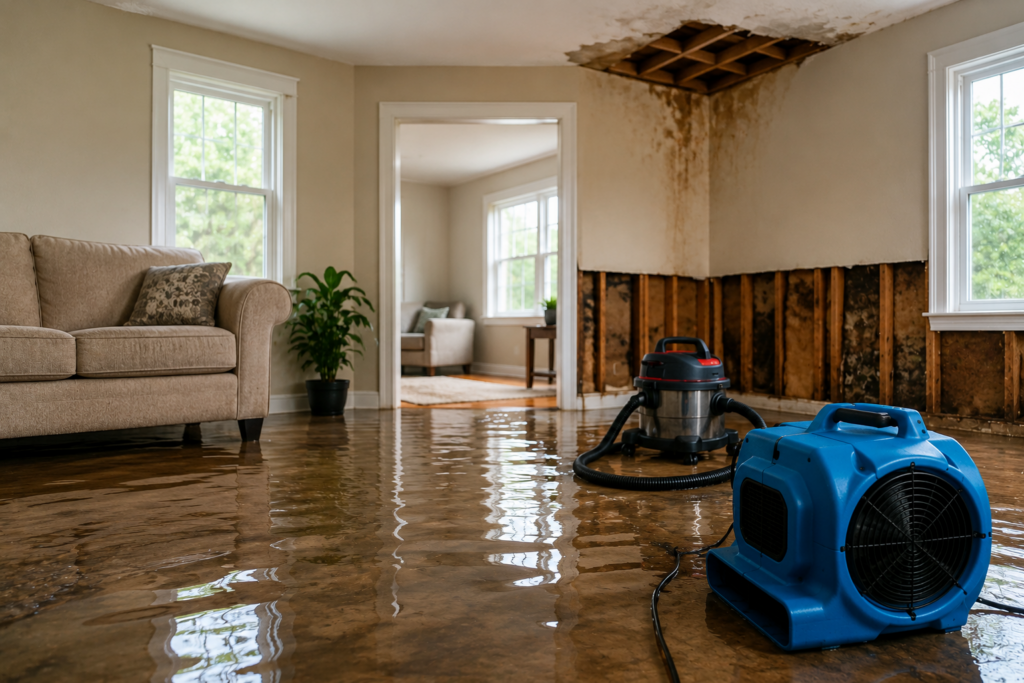
In this guide, we’ll walk you through exactly what to do after water damage in your Texas home, how to protect your property, when to call in a professional water damage restoration company, and what to expect from the process, including cost and insurance.
If you’re in the middle of a water emergency right now, scroll to the section below and act fast. OneCallTX is available 24/7 for emergency water damage repair across Texas.
What to Do Immediately After Water Damage: Step-by-Step
Time is critical. Water spreads fast, soaks into walls and floors, and can lead to mold growth within 24–48 hours. Here’s what to do right now:
Step 1: Make Sure It’s Safe to Enter
Before stepping foot in a water-damaged area, make sure there are no electrical hazards. Water and electricity are a deadly combination. If your electrical panel is in the affected area or you see sparking, leave the building and call emergency services first.
Step 2: Stop the Source of Water
If the damage is from a burst pipe or plumbing failure, shut off the main water supply immediately. Locate your shutoff valve, it’s usually near the water meter outside your home or in a utility room. If the water is coming from a roof leak or external flooding, move belongings to dry areas while avoiding the water source.
Step 3: Document Everything
Before touching anything, take photos and videos of all visible damage. This documentation is critical for your homeowner’s insurance claim. Capture:
- Water stains, standing water, and affected furniture
- Damaged appliances, flooring, or walls
- The source of the leak (if visible)
Step 4: Remove Standing Water If Safe to Do So
Use mops, towels, or a wet/dry vacuum to start removing standing water if you can do so safely. The faster you remove water, the less damage it causes. Do not use a regular household vacuum, it’s not designed for water and can be dangerous.
Step 5: Begin Air Circulation
Open windows and doors (weather permitting) and turn on fans to help begin drying the space. Avoid using HVAC if ducts may be affected. If you have a dehumidifier, run it immediately.
Step 6: Call a Water Damage Restoration Company
Even if the situation seems under control, professional intervention is almost always necessary. Moisture hides in walls, under flooring, and inside insulation, areas you simply cannot detect or dry with standard equipment. A professional water mitigation company uses moisture meters, industrial dehumidifiers, and thermal imaging to ensure complete drying.
 Dealing with water damage right now? Call OneCallTX for 24/7 emergency water damage repair across Texas. Fast response. Free inspection. Call us now: onecalltx.com
Common Causes of Water Damage in Texas Homes
Texas homes face a unique mix of weather conditions and infrastructure challenges. Understanding the common causes can help you respond faster and even prevent future incidents:
- Burst or frozen pipes, especially in North Texas during rare freezes
- Storm flooding and heavy rainfall, common in Houston and the Gulf Coast region
- Roof leaks from wind or hail damage
- HVAC condensation line clogs
- Appliance failures, washing machines, dishwashers, water heaters
- Slab leaks, a common issue in Texas due to shifting clay soil
- Sewage backups after heavy rain events
No matter the cause, the damage escalates quickly. The average Texas homeowner who waits 24–48 hours to address water damage faces significantly higher repair costs, and a much higher risk of mold.
Signs You Need Professional Water Damage Restoration Help
Wondering if your situation warrants a call to a professional? Here are clear signs it’s time to bring in a water mitigation company:
- Standing water that won’t drain or keeps returning
- Wet or warped flooring, especially hardwood or laminate
- Soft, bubbling, or stained drywall
- A musty smell that persists even after drying
- Visible mold or dark spots appearing within days of the water event
- Water damage affecting multiple rooms or more than one floor
- You can’t identify where the water is coming from
- Your home experienced flooding from external sources (sewage, storm, etc.)
If you’re checking multiple boxes above, stop waiting. Mold prevention after water damage is time-sensitive. Professional teams can contain, dry, and treat affected areas before mold takes hold.
What Happens During Professional Water Damage Restoration?
Many homeowners hesitate to call a restoration company because they’re unsure what to expect. Here’s a transparent look at the process:
- Emergency Response & Assessment, A technician arrives, inspects the damage using moisture meters and thermal cameras, and gives you a clear action plan.
- Water Extraction, Industrial-grade pumps and wet vacuums remove standing water quickly and thoroughly.
- Structural Drying, High-powered air movers and commercial dehumidifiers are placed to dry walls, floors, and structural components over several days.
- Moisture Monitoring, Technicians return daily to track moisture levels and adjust equipment placement.
- Mold Remediation (if needed), If mold has begun to form, the team contains and treats affected areas using EPA-approved products.
- Repairs & Restoration, Once the structure is fully dry, repairs begin, from drywall replacement to flooring installation.
One Call Restoration handles every step of this process so you don’t have to coordinate between multiple contractors.
Water Damage Restoration Cost, Insurance & Timeline in Texas
How Much Does Water Damage Restoration Cost?
Water damage restoration in Texas typically ranges from $1,500 to $10,000+, depending on:
- The extent and category of water damage (clean, gray, or black water)
- Square footage affected
- Materials involved (hardwood floors cost more to restore than tile)
- Whether mold remediation is needed
Minor incidents like a small appliance leak may cost $1,500–$3,000, while a slab leak or major flooding can exceed $10,000–$15,000. Getting a professional assessment quickly helps contain both the damage and the cost.
Does Homeowner’s Insurance Cover Water Damage?
In most cases, yes, but the details matter. Standard homeowner’s insurance policies typically cover:
- Sudden and accidental water damage (burst pipes, appliance failures)
- Storm-related damage if you have the right endorsements
They typically do NOT cover:
- Flooding from external sources (you need separate flood insurance for this)
- Gradual leaks or damage due to neglect
- Sewer backups (unless you have a rider for it)
OneCallTX works directly with insurance companies to document damage and help simplify your claims process.
How Long Does Restoration Take?
The drying process typically takes 3–5 days. Full restoration, including repairs, can take 1–3 weeks depending on the severity. The sooner you call, the faster the timeline.
How to Prevent Water Damage in Your Texas Home
While not all water damage is preventable, these steps significantly reduce your risk:
- Inspect your roof twice a year, especially before and after hurricane season
- Have your plumbing inspected annually for signs of corrosion or weak joints
- Clean gutters and downspouts regularly to prevent overflow near your foundation
- Know where your main water shutoff valve is located, and test it once a year
- Install a smart water leak detector near appliances and under sinks
- Insulate pipes in garages and crawl spaces before any freeze event
- Check your HVAC condensation drain line for clogs every spring
Texas homeowners in areas like Houston are especially vulnerable to flooding due to humidity and storm surge. If you’re in a flood-prone zip code, flood insurance and elevated appliances are worth serious consideration.
Frequently Asked Questions About Water Damage in Texas
Can water damage be fixed in 24 hours?
Water damage cannot be fully fixed in 24 hours, but starting the process within 24 hours dramatically improves outcomes. Professional extraction and drying equipment can be set up within hours of your call, which prevents mold growth and limits structural damage. Full restoration typically takes 3–14 days depending on the severity.
Does insurance cover burst pipe water damage?
Yes, in most cases homeowner’s insurance covers burst pipe damage because it’s considered sudden and accidental. You’ll need to document the damage immediately, report it to your insurer, and avoid making major repairs before an adjuster visits. OneCallTX can help you navigate this process.
How quickly does mold grow after water damage?
Mold can begin to grow in as little as 24–48 hours after water exposure, especially in Texas’s warm, humid climate. This is why emergency water damage repair is so important. If you notice a musty smell even a few days after a water event, mold remediation may already be necessary.
What is a water mitigation company?
A water mitigation company specializes in stopping the spread of water damage and beginning the drying process. Mitigation comes before restoration, it’s the emergency phase focused on preventing further loss. OneCallTX provides both mitigation and full restoration services under one roof.
How do I know if water damage is behind my walls?
Signs of hidden water damage include discolored or soft drywall, peeling paint or wallpaper, a musty odor, and higher-than-normal humidity in a specific room. Professional restoration teams use moisture meters and thermal imaging cameras to detect water inside walls without destructive testing.
Is flood cleanup services in Texas covered by insurance?
Flood cleanup from external flooding (storm surge, overflowing rivers) is typically NOT covered by standard homeowner’s insurance, you need a separate flood insurance policy through FEMA’s National Flood Insurance Program (NFIP) or a private insurer. Internal water damage from storms (like a roof leak) may be covered. Always review your policy and call your agent immediately after any water event.
Don’t Wait, Call OneCallTX Now
Water damage doesn’t wait, and neither should you. The longer water sits in your home, the more it costs to fix, and the higher your risk of a serious mold problem.
OneCallTX is Texas’s trusted water damage restoration and flood cleanup service, available 24/7 for emergency response across the state. Our experienced team uses advanced equipment to extract water, dry structures, and restore your home to pre-loss condition, fast.
 24/7 Emergency Response
Free Damage Inspection
Insurance Claim Assistance
Mold Prevention & Remediation
 If water damage is happening right now, don’t wait. Visit onecalltx.com or call us immediately for fast, professional water damage restoration anywhere in Texas.