
How to Know If Water Damage Is Behind Your Walls
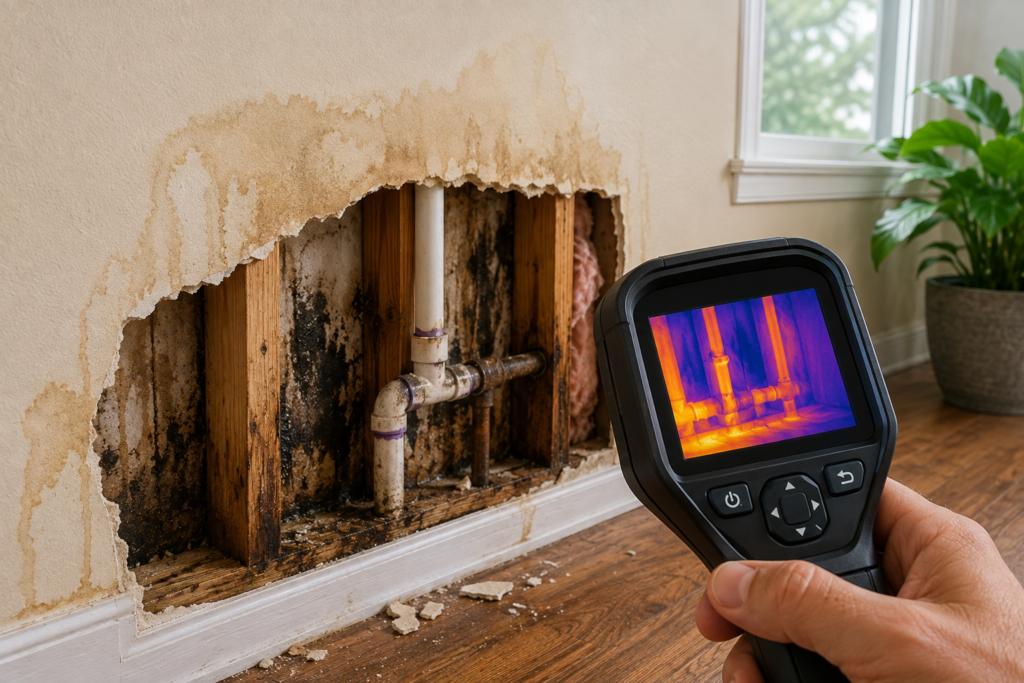
Dealing with hidden water damage can be overwhelming—especially when you can’t see the source. Unlike a burst pipe or an overflowing appliance, water damage behind your walls can go unnoticed for weeks or months, quietly causing rot, mold, and structural issues the whole time. Acting quickly once you spot the warning signs can make a big difference in preventing extensive repairs.
In this guide, we’ll walk you through exactly how to spot hidden water damage, what causes it, and when it’s time to call a professional for leak detection and moisture inspection.
What to Do Immediately
If you suspect water damage is hiding behind your walls, here’s how to investigate safely:
Look for visual clues. Check for discoloration, staining, bubbling paint, or peeling wallpaper on walls and ceilings.
Do a touch test. Press gently on the drywall in suspicious areas. Wet drywall often feels soft, spongy, or cool to the touch compared to surrounding areas.
Smell for mustiness. A persistent musty odor is one of the strongest indicators of hidden moisture, even when nothing looks visibly wrong.
Check nearby fixtures. Inspect areas near plumbing lines, water heaters, washing machines, and exterior walls where leaks commonly originate.
Watch your water bill. An unexplained spike in your water usage can point to a hidden leak somewhere in your plumbing system.
Turn off water and call for help. If you find strong evidence of a leak, shut off the water supply to the affected fixture or your main valve, and call a professional for moisture detection before the damage spreads further.
Catching hidden water damage early—before it spreads to insulation, framing, or flooring—can save you thousands in repair costs.
Common Causes of Hidden Water Damage
Water damage behind walls often starts small and stays out of sight for a while. Common causes include:
Slow plumbing leaks. A small drip inside a wall cavity can go undetected for months, especially in less-used areas of the home.
Roof leaks. Water can travel along framing and insulation before showing up on a ceiling or wall far from the actual entry point.
Faulty appliance connections. Washing machines, dishwashers, and refrigerator water lines are common sources of slow, hidden leaks.
Condensation buildup. HVAC lines and poorly insulated pipes can sweat inside wall cavities, gradually saturating drywall and framing.
Exterior water intrusion. Poor grading, damaged siding, or failed window and door seals can let water seep into wall cavities from outside.
In Texas homes, condensation from AC units and slow leaks around exterior walls are especially common causes of hidden moisture during the hot, humid months.
Signs You Need Professional Moisture Detection
Not every suspicious spot requires a professional inspection, but these signs mean it’s time to call in an expert:
Musty odors that persist without an obvious source
Discoloration, staining, or warping on walls or ceilings that keeps spreading
Soft, spongy, or bubbling drywall
Unexplained increases in your water bill
Visible mold growth on or near walls
A history of past leaks or water damage in the same area
Peeling paint or wallpaper with no clear cause
If you’re dealing with any of these signs right now, don’t wait for the damage to become visible on the surface—by then, it’s often already extensive behind the wall.
What Happens During Professional Leak Detection
Knowing what to expect can ease the uncertainty of dealing with a suspected hidden leak. Here’s how professionals typically approach it:
Visual and moisture inspection. Technicians use moisture meters to test walls, floors, and ceilings for elevated moisture levels not visible to the eye.
Thermal imaging. Infrared cameras detect temperature differences that reveal moisture patterns hidden behind walls, even without any visible damage.
Leak source identification. Once moisture is confirmed, technicians trace the source, whether it’s a plumbing line, roof leak, or exterior intrusion point.
Targeted access. Rather than tearing out entire walls, technicians often open only the affected sections needed to reach and repair the source.
Drying and dehumidification. Air movers and dehumidifiers are set up to dry out wall cavities and framing before any mold can develop.
Repair and restoration. Damaged drywall, insulation, or framing is replaced, and the wall is restored to its original condition.
An experienced team with thermal imaging and advanced moisture detection equipment can typically identify the source of hidden water damage in a single visit.
Cost, Insurance, and Timeline
How much does hidden water damage repair cost? Costs vary depending on how far the water has traveled and how much material needs to be replaced, but homeowners can generally expect a few hundred dollars for a small, contained leak up to several thousand for extensive damage involving framing or multiple walls.
Does insurance cover hidden water damage? Homeowners insurance typically covers sudden, accidental leaks, but often excludes damage caused by long-term, undetected leaks that could have been caught with regular maintenance. Documentation from a professional inspection can help support your claim either way.
How long does moisture detection and repair take? Initial inspection and leak detection can often be completed in a single visit, while drying typically takes 2–4 days. Full repairs depend on the extent of the damage, ranging from a few days to a couple of weeks.
How to Prevent Hidden Water Damage
Schedule annual plumbing inspections, especially for older homes
Check appliance hoses and connections yearly for wear or corrosion
Monitor your water bill for unexplained increases
Keep gutters clean and ensure proper grading away from your foundation
Install a leak detection device near water heaters, washing machines, and under sinks
Address any musty smells or visible staining right away instead of waiting
FAQs
How can I tell if there’s water damage behind my walls?
Look for discoloration, soft or spongy drywall, musty odors, and unexplained spikes in your water bill. These are the most common early indicators of hidden moisture.
What does wet drywall feel like?
Wet drywall typically feels soft, spongy, or cooler to the touch than the surrounding dry areas, and it may show slight bulging or warping.
Can hidden water damage cause mold?
Yes, hidden moisture behind walls creates ideal conditions for mold growth, often within 24–48 hours, since the enclosed space traps humidity and stays out of sight.
How do professionals find leaks without tearing open walls?
Professionals use moisture meters and thermal imaging cameras to detect elevated moisture and temperature differences behind walls without needing to open them first.
Is hidden water damage covered by insurance?
It depends on the cause—sudden, accidental leaks are typically covered, while damage from long-term, undetected leaks may not be, especially if regular maintenance was neglected.
Don’t Let Hidden Damage Stay Hidden
Water damage behind your walls doesn’t stay contained for long. If you’re noticing any warning signs right now, acting quickly can be the difference between a simple repair and a major renovation. Our experienced team is available 24/7 with the thermal imaging and moisture detection equipment needed to find the problem fast.