
How to Prevent Mold After Water Damage
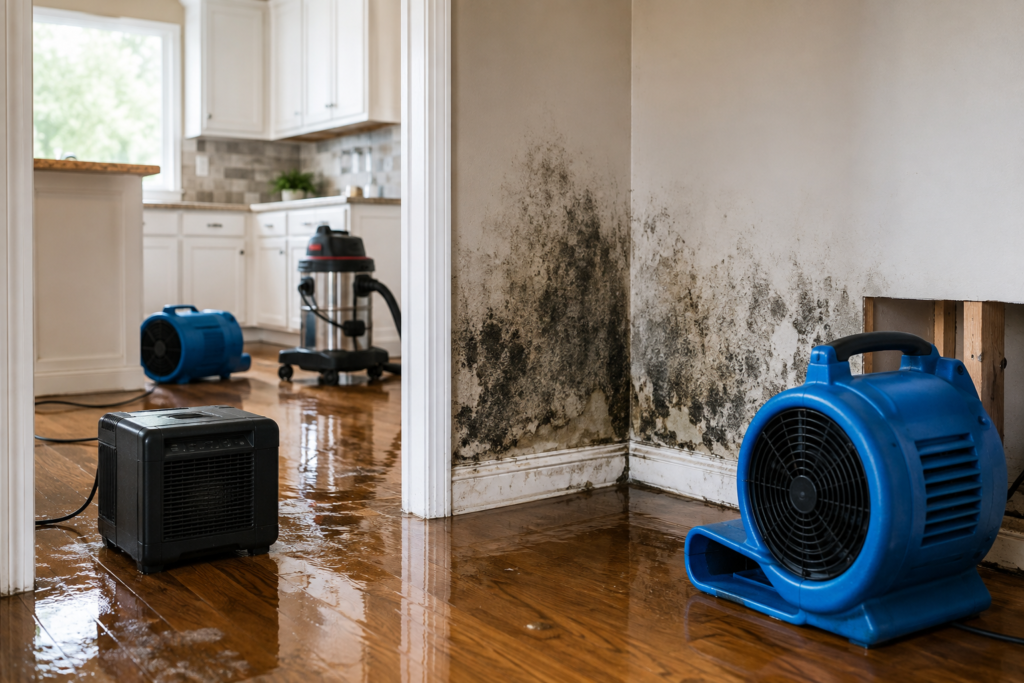
Dealing with water damage can be overwhelming—especially when it happens unexpectedly. But the danger doesn’t end once the water is gone. Mold after water damage can start growing within 24–48 hours, turning a plumbing problem into a health and structural issue. Acting quickly can make a big difference in preventing mold growth and costly repairs.
In this guide, we’ll walk you through exactly what to do to stop mold before it starts, and when it’s time to call a professional for mold remediation.
What to Do Immediately
Mold prevention starts the moment water hits your floors. Here’s your step-by-step action plan:
- Remove standing water fast. Use a wet/dry vacuum, mops, or towels to extract as much water as possible within the first few hours.
- Ventilate the space. Open windows and doors if weather allows, and set up fans to circulate air and speed up drying.
- Run a dehumidifier. Reducing humidity below 50% makes it much harder for mold spores to take hold.
- Remove wet materials that can’t be dried quickly. Carpet padding, cardboard, insulation, and drywall that stay damp for more than 48 hours often need to be discarded.
- Clean and disinfect affected surfaces. Use a mixture of water and mild detergent, or an antimicrobial cleaner, on hard surfaces once they’re dry.
- Check hidden areas. Look behind baseboards, under carpets, and inside cabinets—mold often starts where it can’t be seen.
The first 24–48 hours after water damage are the most critical window for preventing mold growth.
Common Causes of Mold After Water Damage
Mold doesn’t need much to grow—just moisture, warmth, and time. Common triggers include:
- Incomplete drying. Surfaces that look dry on top can still hold moisture underneath, especially drywall, carpet padding, and wood subfloors.
- Poor ventilation. Closed-off rooms with little airflow trap humidity, creating ideal conditions for mold.
- High indoor humidity. Texas summers bring heat and humidity that can keep materials damp long after a leak is fixed.
- Hidden leaks. Water that seeps into wall cavities, under flooring, or behind cabinets often goes unnoticed until mold appears.
- Delayed cleanup. Waiting even a day or two to address water damage significantly increases the risk of mold taking hold.
Mold after water damage is especially common in humid Texas homes, where warm, moist air accelerates spore growth if materials aren’t dried properly.
Signs You Need Professional Mold Remediation
Some water damage can be handled with fans and a dehumidifier. But certain signs mean it’s time to bring in a professional mold remediation team:
- Visible mold growth larger than about 10 square feet
- A persistent musty odor that doesn’t go away after drying
- Water damage that occurred more than 48 hours ago and wasn’t fully dried
- Mold appearing on porous materials like drywall, carpet, or insulation
- Household members experiencing allergy-like symptoms—sneezing, coughing, itchy eyes—that improve when they leave the house
- Mold returning after a previous DIY cleanup attempt
If you’re dealing with any of these situations right now, don’t wait to make the call. Mold spreads quickly and can affect both your home’s structure and your family’s health.
What Happens During Professional Mold Remediation
Understanding the process can ease some of the stress of dealing with mold. Here’s what a professional remediation typically involves:
- Inspection and assessment. Technicians use moisture meters and sometimes air quality testing to identify the extent of mold growth and hidden moisture sources.
- Containment. Affected areas are sealed off with plastic sheeting and negative air pressure to prevent spores from spreading to unaffected rooms.
- Air filtration. HEPA air scrubbers remove airborne mold spores during the remediation process.
- Removal of contaminated materials. Porous materials that can’t be fully cleaned, like moldy drywall or carpet, are safely removed and disposed of.
- Cleaning and treatment. Remaining surfaces are cleaned with antimicrobial and antifungal treatments to eliminate spores and prevent regrowth.
- Drying and restoration. The space is fully dried, and any removed materials are replaced to restore the area to its original condition.
An experienced team with advanced equipment can typically complete mold remediation within a few days, depending on the size and severity of the affected area.
Cost, Insurance, and Timeline
How much does mold remediation cost? Costs depend on the size of the affected area and severity of growth, but homeowners can generally expect anywhere from a few hundred dollars for small, contained areas to several thousand for extensive remediation involving multiple rooms.
Does insurance cover mold damage? Homeowners insurance often covers mold removal if it resulted directly from a covered water damage event, like a burst pipe, but typically excludes mold caused by long-term neglect or unresolved humidity issues. Review your policy and document the original water damage event for your claim.
How long does mold remediation take? Small, contained mold issues can often be resolved in 1–3 days, while larger infestations involving multiple rooms or structural materials may take a week or more, including drying and material replacement time.
How to Prevent Mold in the Future
- Address leaks and water damage within the first 24–48 hours, every time
- Keep indoor humidity between 30–50% using a dehumidifier or HVAC system
- Ensure bathrooms, kitchens, and laundry rooms have proper ventilation
- Check under sinks, around water heaters, and near appliances regularly for hidden leaks
- Clean gutters and grade soil away from your foundation to prevent water intrusion
- Consider a whole-home dehumidifier if you live in a consistently humid climate
FAQs
How soon can mold grow after water damage?
Mold can begin growing within 24–48 hours after water exposure if the area isn’t properly dried, making fast action essential to prevention.
Can I prevent mold without professional help?
Yes, for small, recent water damage you can often prevent mold with quick extraction, fans, and a dehumidifier—but larger or older water damage typically needs professional remediation.
Does homeowners insurance cover mold remediation?
Insurance often covers mold removal when it results from a sudden, covered event like a burst pipe, but usually excludes mold from long-term neglect or unresolved moisture problems.
What’s the difference between mold cleaning and mold remediation?
Mold cleaning typically addresses surface-level mold on hard, non-porous surfaces, while mold remediation involves containment, air filtration, and removal of contaminated materials for larger or more serious infestations.
How do I know if mold is hidden in my walls?
A persistent musty smell, unexplained allergy symptoms, or discoloration on walls even after the surface looks dry can all indicate hidden mold behind walls or under flooring.
Don’t Give Mold a Chance to Take Hold
Mold moves fast, but you can move faster. If you’re dealing with water damage right now, acting within the first 24–48 hours is the best way to prevent mold from taking hold. Our experienced team is available 24/7 with the advanced equipment needed for thorough drying and mold remediation.