
How to Handle Emergency Storm Damage Repair Before Help Arrives
Dealing with storm damage can be overwhelming—especially when it hits without warning. Whether it’s a collapsed roof section, shattered windows, flooded rooms, or structural damage from high winds, acting quickly in the first few hours can make all the difference. The steps you take before a storm damage restoration service arrives can protect your home, your family, and your insurance claim.
In this guide, we’ll walk you through exactly what to do if you’re facing emergency storm damage repair—and when it’s time to stop and let the professionals take over.
What to Do Immediately After Storm Damage
Time is critical. The longer water, wind, or debris exposure continues, the more damage your home sustains. Here’s how to respond fast and smart:
Make sure everyone is safe first. Don’t re-enter the home until you’re certain there are no gas leaks, downed power lines nearby, or visible structural collapses. Call 911 if anyone is injured.
Shut off utilities if it’s safe to do so. If the storm caused flooding or roof damage that’s allowing water inside, turn off electricity at the breaker panel. If you smell gas, leave immediately and call your utility company.
Document everything before touching anything. Take photos and video of all visible damage—inside and outside. This is critical for your insurance claim. Capture roof damage, broken windows, water intrusion, damaged belongings, and any structural issues.
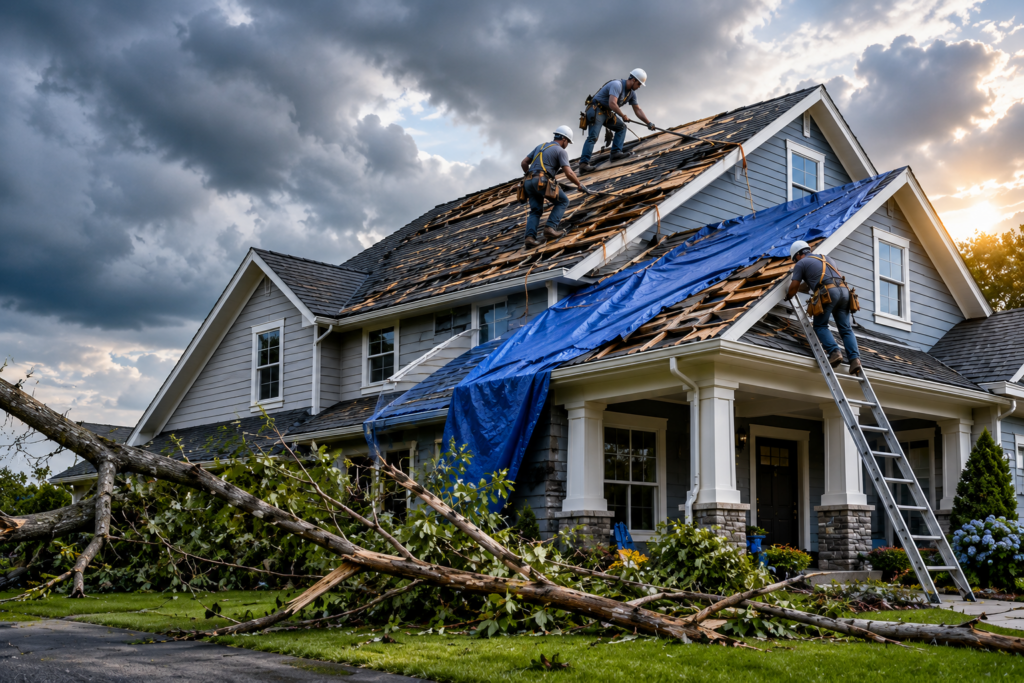
Cover exposed areas with tarps or boards. If part of your roof is missing or windows are broken, use waterproof tarps, plywood, or plastic sheeting to reduce ongoing exposure. This temporary fix limits further water intrusion until storm damage restoration pros arrive.
Remove standing water if you can do it safely. Use buckets, mops, or a wet-dry vacuum to remove pooled water from hard floors. Do not use a regular vacuum—it’s a safety hazard. Don’t enter flooded basements.
Call your insurance company. Report the damage as soon as possible. Ask them about the claims process, what’s covered, and whether they have a preferred emergency storm damage repair contractor list.
Call a 24/7 storm damage restoration service. This is not a job you should leave to chance or DIY indefinitely. The longer damage goes unaddressed, the worse—and more expensive—it becomes. At OneCallTX, we respond around the clock to storm emergencies across Texas.
Common Causes of Storm Damage in Texas Homes
Texas weather is unpredictable and severe. Understanding what caused the damage helps restoration teams prioritize their response and helps you communicate clearly with your insurer.
High winds and tornadoes: Can strip roofing materials, collapse walls, and send debris through windows and siding.
Hail: Damages shingles, gutters, siding, and HVAC units. Even minor-looking hail damage can allow water to seep in over time.
Flash flooding: Common in the Houston area and throughout Central Texas, especially during heavy rain events. Flooding causes structural damage and mold growth within 24–48 hours if not treated.
Fallen trees and limbs: Can cause roof punctures, broken windows, and foundation damage.
Lightning strikes: Can cause fires, electrical damage, and power surges that damage appliances and wiring.
Frozen pipes after ice storms: Particularly impactful during rare winter events in Texas, causing burst pipes and interior flooding.
Signs You Need a Professional Storm Damage Restoration Service—Right Now
There’s a point where DIY responses stop being helpful and start being dangerous. Call in a professional storm damage restoration service immediately if you notice any of the following:
Visible structural damage—sagging ceilings, cracked walls, leaning or unstable sections
Water is actively entering the home and you can’t stop it
Basement or crawl space flooding
Electrical hazards—sparking outlets, flickering lights, burning smell
Roof damage that exposes interior to the elements
Musty smell suggesting mold is already developing
Standing water you cannot remove on your own
If you’re dealing with any of these right now, don’t wait. Call OneCallTX—we’re available 24/7 for emergency storm damage repair across Texas.
What Happens During Professional Storm Damage Restoration
A lot of homeowners hesitate to call because they’re not sure what to expect. Here’s a clear breakdown of what a professional emergency storm damage repair process typically looks like:
Inspection and damage assessment: Technicians conduct a full walkthrough to assess the extent of damage—structural, water, electrical, and more.
Emergency board-up and tarping: Any openings that expose the interior are secured immediately to prevent further damage and unauthorized entry.
Water extraction: Industrial-grade pumps and extraction equipment remove standing water far faster than consumer tools.
Drying and dehumidification: High-powered air movers and commercial dehumidifiers remove moisture trapped in walls, floors, and ceilings to prevent mold growth.
Debris removal and cleaning: Storm debris, damaged materials, and contaminated items are safely removed and disposed of.
Structural repair and rebuilding: Once the structure is dried and stabilized, repairs begin—from roofing and siding to drywall and flooring.
Insurance documentation: A reputable storm damage restoration service will help document everything needed for your insurance claim, including detailed reports and photographic evidence.
Cost, Insurance, and Timeline: What to Expect
How much does emergency storm damage repair cost?
Costs vary widely depending on the extent of damage. Minor repairs such as temporary tarping or small water extraction jobs may run a few hundred dollars. Major storm events involving structural damage, roof replacement, or extensive water damage can range from $5,000 to $30,000 or
Does homeowners insurance cover storm damage?
more. The sooner you act, the less secondary damage (and cost) accumulates.
Most standard homeowners insurance policies in Texas cover storm damage caused by wind, hail, and lightning. Flood damage from rising water typically requires a separate flood insurance policy. Always document damage thoroughly before any cleanup, and contact your insurer as soon as possible to start the claims process.
How long does storm damage restoration take?
Emergency stabilization (tarping, board-up, water extraction) can often be completed within 24–48 hours of initial contact. Full restoration—including structural repairs and interior finishing—can take anywhere from a few days to several weeks, depending on the scope of damage. Your restoration team will give you a detailed timeline after the initial assessment.
How to Reduce Storm Damage Risk Before the Next Storm Hits
You can’t control Texas weather, but you can reduce the impact it has on your home. After your current situation is resolved, consider these preventive steps:
Inspect your roof annually: Look for missing, curled, or damaged shingles—especially after hail season.
Clean gutters and downspouts regularly: Blockages cause water to back up and seep under roofing materials.
Trim overhanging trees: Dead or overhanging branches are the #1 cause of roof punctures during storms.
Seal windows and doors: Weatherstripping and caulking prevent water infiltration during heavy rain.
Consider a sump pump for flood-prone areas: Especially relevant for homes in the Houston metro and low-lying Central Texas areas.
Keep an emergency kit ready: Tarps, plywood, sandbags, flashlights, and emergency contacts (including your storm damage restoration service) stored and accessible.
Frequently Asked Questions About Emergency Storm Damage Repair
What counts as storm damage for insurance purposes?
Storm damage for insurance purposes typically includes any physical damage to your home caused directly by a storm event—wind, hail, lightning, or falling debris. This includes roof damage, broken windows, siding damage, and interior water damage from storm-created openings. Flooding from rising groundwater usually requires separate flood insurance coverage.
Can storm damage be repaired in 24 hours?
Emergency stabilization—tarping, board-up, and water extraction—can often be completed within 24 hours of your call. Full structural repairs take longer. The priority in the first 24 hours is stopping active damage and preserving the structure until comprehensive repairs can begin.
Is it safe to stay in my home after storm damage?
It depends on the severity. If there is structural damage, active flooding, exposed electrical wiring, or risk of collapse, do not stay in the home. If damage is limited to broken windows or minor roof damage that has been temporarily covered, you may be able to remain—but consult with your restoration team first.
What should I not do after storm damage?
Avoid entering rooms with standing water and electrical outlets or appliances nearby. Don’t use a regular vacuum on water. Don’t wait to document damage—changes in condition can affect your insurance claim. Don’t throw away damaged items before your adjuster has seen them. And don’t attempt structural repairs yourself without professional assessment.
How do I find a reliable storm damage restoration service near me?
Look for a licensed, insured restoration company with 24/7 emergency availability, verifiable local experience, and the ability to work directly with your insurance company. In Texas, One Call Restoration serves homeowners and businesses across the state with rapid response, certified technicians, and full-service restoration from emergency stabilization through final repairs.
Does mold develop quickly after storm flooding?
Yes. Mold can begin growing within 24 to 48 hours of water exposure—especially in warm, humid Texas conditions. This is one of the biggest reasons emergency storm damage repair needs to happen fast. Professional drying and dehumidification equipment removes moisture at a rate that prevents mold from taking hold.
Don’t Wait—OneCallTX Is Ready Right Now
When a storm hits your Texas home, every hour of inaction means more damage, more cost, and more stress. Emergency storm damage repair isn’t something to delay or DIY your way through. The steps above can help you stabilize the situation—but the moment you’re in over your head, it’s time to call in the professionals.
One Call Restoration provides 24/7 emergency storm damage restoration service across Texas. Our experienced team responds fast with advanced equipment, handles insurance documentation, and restores your property from start to finish.
📞Call us now for a free inspection and immediate response. We’re available around the clock because storms don’t wait—and neither should you.